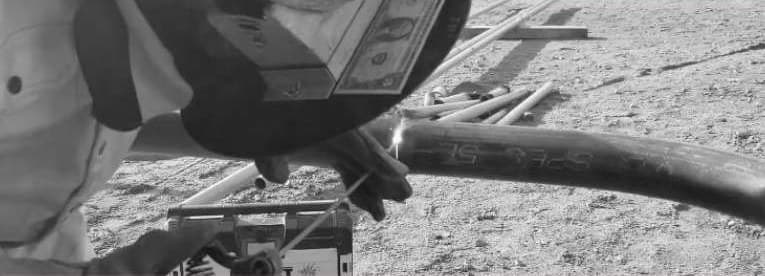
You can weld aluminium with a stick welder. Covered aluminium electrodes are a real product with a real standard behind them - AWS A5.3 covers E1100, E3003 and E4043 - and they run on DC electrode positive with the work preheated. What you should know before buying any is that TWI's own guidance on welding aluminium does not list stick welding as a process for it at all.
So it is possible. What does the standard actually cover?
AWS A5.3/A5.3M:2023, the Specification for Aluminum and Aluminum-Alloy Electrodes for Shielded Metal Arc Welding, covers covered - that is, flux-coated - E1100, E3003 and E4043 aluminium-alloy electrodes, with an EG designation for alloys outside those three. So the product is standardised, not improvised.
E4043 covered electrodes, as sold
| Diameter | Amperage, flat position | Polarity |
|---|---|---|
| 3/32 inch (2.4 mm) | 50-85 A | DC electrode positive |
| 1/8 inch (3.2 mm) | 75-130 A | DC electrode positive |
| 5/32 inch (4.0 mm) | 100-165 A | DC electrode positive |
Those figures are a supplier's published ranges for E4043 rather than a manufacturer's, so treat them as a starting point and use whatever is printed on the tube you buy. The polarity is not negotiable: DC electrode positive, and a machine that only does AC will not run these rods - what AC and DC change explains why. The general method is the same as stick welding steel; what changes is that every mistake costs more.
Why almost nobody does it
Aluminium is difficult to weld by any process, and stick welding removes most of the tools you would normally use to manage the difficulty. TWI set out the problems, and each one is worse with a covered electrode.
- Hydrogen porosity. TWI name the main cause of porosity in aluminium welds as hydrogen absorbed into the weld pool, from hydrocarbons and moisture on the parent metal and filler surfaces. A flux coating is exactly the kind of surface that holds moisture, and unlike a low-hydrogen steel rod nobody sells you an oven for it
- Heat runs away. TWI attribute profile imperfections in aluminium welds to its high thermal conductivity - the heat leaves the joint faster than the arc puts it in, so the start of a bead is cold and the end is molten
- It moves twice as much as steel. TWI put aluminium's thermal expansion at twice that of steel, with substantial contraction on solidification, which is what generates the stresses that cause solidification cracking
- The heat affected zone gets weaker. On non heat-treatable alloys, welding removes the effect of work hardening and softens the metal beside the weld. The joint can be sound and the part still be weaker than it was
- The slag is corrosive. Aluminium electrode flux residue attacks the metal it is left on. Steel slag can sit on a bead until you get round to it; this cannot
And the process TWI actually lists for wrought aluminium: TIG, MIG, oxyfuel and friction stir welding. Manual metal arc is not mentioned. That absence is the most honest summary of where stick welding sits on aluminium, and it is worth knowing before you spend on rods.
If you are going to do it anyway
This is repair welding on cast or thick aluminium with the machine you have. Done carefully it works; done the way you would weld steel it produces a pile of slag and a cracked joint.
- Clean to bright metal with a stainless wire brush kept only for aluminium. A brush used on steel will drive steel particles into the surface
- Degrease afterwards. TWI name hydrocarbons and moisture as the source of the porosity, and a fingerprint is a hydrocarbon
- Set DC electrode positive. Check it rather than assuming
- Preheat. This is the step people skip and it is the one that decides the outcome, because the heat leaves the joint as fast as the arc delivers it. Thicker sections need more
- Keep the arc very short and move fast. There is no slow, careful bead in aluminium stick welding - the puddle goes from nothing to a hole in about a second
- Do not weave. Run stringers
- Chip and wash the slag off immediately, with hot water and a brush. The residue is corrosive and it does not wait
- Store the rods somewhere genuinely dry, and throw away any that have been open in a damp workshop. Flux that has taken up moisture makes porous welds and there is no rebake published for these
The alternatives, in the order you should consider them
Better ways to join aluminium
Each of these is easier and gives a better joint than a covered aluminium electrode.
- AC TIG
- the standard answer. Alternating current strips the oxide film, and you control heat and filler separately. This is what the job is for
- MIG with a spool gun
- fast, and the right choice on thicker aluminium. A standard liner will not feed aluminium wire - it is too soft and birdnests at the rollers
- Aluminium brazing rods
- for thin repairs, a propane torch and a low-temperature aluminium brazing alloy avoids melting the parent metal at all, and is far more forgiving than an arc
- Mechanical fastening
- on a non-structural repair, a rivet or a bolt is not a defeat. A cracked aluminium casting that has already been welded once is often better drilled and pinned
If you are buying a machine rather than making do, the thing to check is that it says AC/DC rather than DC - a DC-only TIG will weld steel and stainless beautifully and will not touch aluminium. Our comparison of TIG machines goes through which of them do AC and what the settings mean, and MIG against TIG covers the choice itself.
Frequently asked questions
Can you stick weld aluminium with normal steel rods?
No. Steel electrodes deposit steel, which will not alloy with aluminium - you get a mess that looks like a weld and holds nothing. Aluminium needs an aluminium electrode: E1100, E3003 or E4043 under AWS A5.3, and they are sold as a separate product.
What polarity do aluminium stick electrodes use?
DC electrode positive. An AC-only machine cannot run them. That is the opposite situation from TIG, where aluminium specifically needs AC - on a covered electrode the flux does the oxide cleaning that AC does on a TIG arc.
Do I need to preheat?
Yes on anything but thin sheet, and it is the step that decides whether the weld works. Aluminium's thermal conductivity carries heat out of the joint faster than the arc puts it in, which TWI identify as the cause of profile problems in aluminium welds. Without preheat the start of the bead never fuses and the end melts through.
Why does my aluminium stick weld look like it is full of holes?
Hydrogen porosity, almost certainly. TWI name the cause as hydrogen absorbed into the weld pool from moisture and hydrocarbons on the metal and the filler. With covered electrodes the flux itself holds moisture, so clean the metal, degrease it, and do not use rods that have been sitting open in a damp shop.
Is stick welding aluminium strong enough for a structural repair?
Treat it as not. Aluminium loses strength in the heat affected zone on non heat-treatable alloys, the process is prone to porosity and solidification cracking, and stick gives you the least control of any option. For anything carrying a load, use AC TIG or MIG, or have it done by someone who can.
Sources
- AWS A5.3/A5.3M:2023, Specification for Aluminum and Aluminum-Alloy Electrodes for Shielded Metal Arc Welding (preview PDF)
- TWI - Weldability of materials: aluminium alloys, and the processes TWI list for them
- TWI - Avoiding porosity when welding aluminium
- Welding Material Sales - E4043 amperage ranges and polarity
- Weld.com - tips for stick welding aluminium: polarity and preheat
In short
Aluminium stick electrodes exist, they are standardised under AWS A5.3, and they run on DC electrode positive with the work preheated. They are also a last resort. Aluminium carries heat away faster than the arc delivers it, moves twice as much as steel, absorbs hydrogen from any moisture in reach, and loses strength beside the weld - and a flux-coated rod gives you the fewest tools of any process for managing all four. If an AC TIG machine or a spool gun is available, this page is not the answer to your problem.