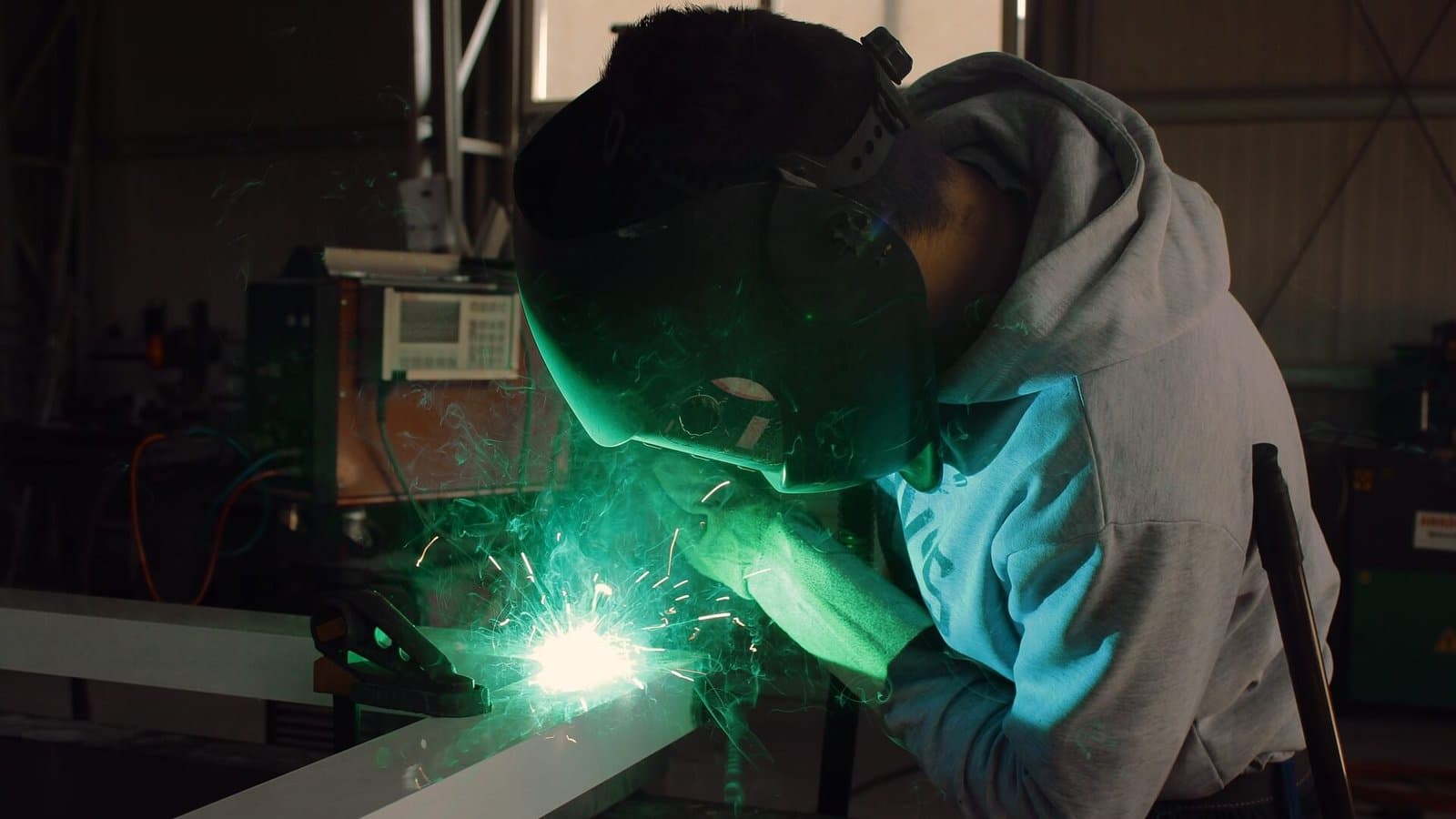
One line separates all three. Welding melts the parent metal; brazing and soldering melt only the filler and leave the parent metal solid. Brazing and soldering are then separated from each other by temperature alone: TWI put the line at 450 degrees C. Above it is brazing, below it is soldering.
Welding, brazing and soldering compared
| Welding | Brazing | Soldering | |
|---|---|---|---|
| Does the parent metal melt | Yes | No | No |
| Filler melting point | Similar to the parent metal | Above 450 C, below the parent metal | Below 450 C |
| Joint strength | Strongest - usually stronger than the parent metal | Strong, but below a weld | Weakest of the three |
| Distortion and residual stress | Greatest | Minimal | Least |
| Joining two different metals | Difficult for most processes | Yes, routinely | Yes |
| Typical work | Structure, pressure vessels, chassis | Refrigeration pipe, tool tips, bike frames, HVAC | Electronics, thin copper plumbing, sheet tin |
| Heat source | Arc, flame, laser, resistance | Torch, furnace, induction coil | Iron, hot air, small torch |
The one line that separates all three
TWI, the welding institute, define brazing as a high-temperature version of soldering in which the filler melts above 450 degrees C but always below the melting point of the base material. That second half matters as much as the first: if the base material melts, the process has stopped being brazing and become welding. The whole family of welding processes sits on the other side of that line.
Everything people argue about downstream - which is stronger, which distorts, which joins copper to steel - falls out of that one fact. A weld is a new piece of metal formed from the two parts and the filler together. A brazed or soldered joint is two unchanged parts held by a third metal that has flowed between them.
Welding: the parent metal melts
Because the parent metal becomes part of the joint, a sound weld is normally stronger than the metal either side of it - filler is chosen to over-match. The cost is heat. TWI note that welding produces greater thermal distortion and residual stress than brazing, and that for most processes it joins similar metals only. If you are choosing a process rather than a joining method, MIG against TIG and stick welding are where most people start, and our comparison of TIG machines covers what the numbers on a spec sheet actually mean.
Brazing: the filler flows into the joint by itself
Brazing is the one most people have never watched. The two parts are heated, but not to melting; the braze alloy is touched to the joint and drawn into the gap by capillary action. You do not fill a gap with it - the gap pulls it in, which is why the clearance between the parts is the thing that decides whether a brazed joint works.
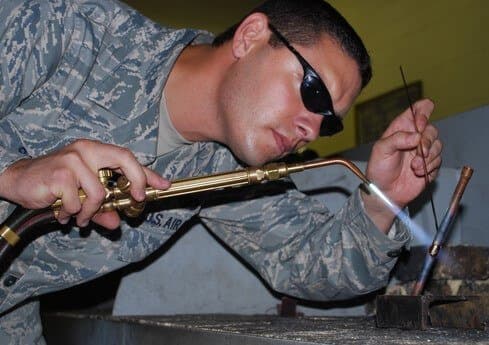
TWI describe the braze alloy as being drawn in by capillary action and protected by a suitable atmosphere, often a flux. Heating can come from a torch, a furnace or an induction coil - torch brazing usually runs on oxy-acetylene or propane, which is the same bottle family covered in welding gases and what each one is for. Production brazing is done in atmospheres ranging from combusted fuel gas to vacuum. The filler and the parent metal have to be metallurgically compatible, which is a real constraint and not a formality.
What brazing buys you: dissimilar metals joined routinely - copper to steel, carbide tips to a steel saw blade - almost no distortion, and joints that can be taken apart again with heat. What it costs you: a joint weaker than a weld, and a hard dependency on joint clearance and cleanliness.
Soldering: the same idea, below 450 degrees
Soldering works exactly as brazing does - filler melts, parent metal does not, capillary action draws it in - at a low enough temperature that a handheld iron can do it. That is the entire difference, and it is why electronics and thin copper plumbing are soldered rather than brazed.
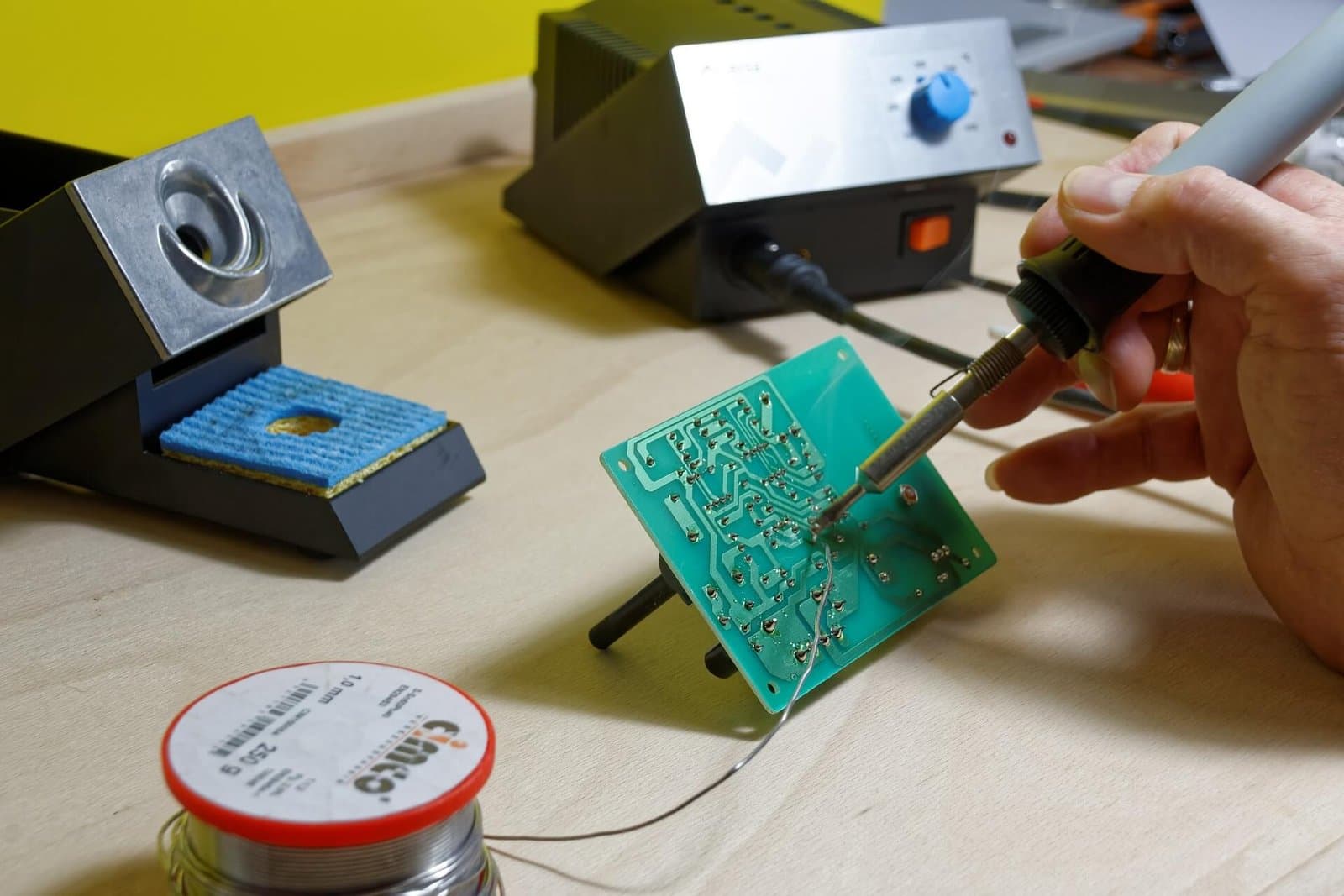
Solder has almost no structural strength by the standards of the other two. That is not a flaw - a plumbing joint is held by the pipe and the fitting, and the solder only has to seal it.
Braze welding, which is neither
The one that causes the confusion. In braze welding the filler is laid into a prepared groove or fillet like a weld bead, rather than being drawn into a close-fitting joint by capillary action - but the parent metal still does not melt. It is the process used to repair cast iron, where melting the parent metal would crack it.
The safety differences nobody mentions
These three are not equally hazardous, and the differences are not the ones people expect. There is no arc in brazing or soldering, so there is no arc-eye risk and no welding helmet needed - shaded safety glasses are enough for a brazing flame. The fume is the other way round.
The standard's instruction for both is the same: use enough ventilation or exhaust, or both, to keep fumes and gases out of your breathing zone and the general area, and if that cannot be done, use air-supplied respirators. In a confined space with fluoride-bearing flux, local exhaust ventilation or respiratory protection is not optional.
Which should you use?
Watch the three done one after another if you have not seen brazing before - the moment the alloy is pulled into the joint is not obvious from a description.
Choosing between them
Work down this list; the first line that matches is your answer.
- The joint carries a structural load
- weld it. Nothing else is as strong
- The two parts are different metals
- braze. Welding copper to steel is a specialist job; brazing it is ordinary
- The parts are thin, or must not distort
- braze or solder. The parent metal never reaches melting point, so it never moves
- It is a circuit board or a small copper pipe
- solder
- It is cast iron, and it is cracked
- braze weld it. Melting cast iron with an arc usually cracks it again beside the repair
- It has to come apart again one day
- braze or solder. A weld does not undo
Frequently asked questions
Is brazing as strong as welding?
No. TWI describe brazed joints as stronger than soldered ones but of lower strength than welds. A sound weld is usually stronger than the parent metal because the parent metal itself has become part of the joint; a brazed joint is held by a filler that never melted the parent metal at all. For a structural load, weld it.
What temperature separates brazing from soldering?
450 degrees C. Above it the process is brazing, below it soldering. The filler must also melt below the melting point of the parts being joined - if the parent metal melts too, it has become welding.
Can you braze two different metals together?
Yes, and it is one of the main reasons to braze. Copper to steel, carbide tips to steel saw blades, brass to cast iron. The filler and the parent materials still have to be metallurgically compatible, so it is not unlimited - but it is routine where welding the same pair would be a specialist job.
Do I need a welding helmet to braze?
No. There is no arc, so there is no arc-eye risk and no ultraviolet to speak of. Shaded safety glasses are the normal protection against the infrared and the glare. The hazard that does need attention is the fume: cadmium-bearing filler and fluoride-bearing flux both carry mandatory warning labels under AWS Z49.1, and both need ventilation.
Why does a brazed joint need a small gap?
Because the filler is pulled in by capillary action rather than poured in. Too tight and the alloy cannot enter; too loose and capillary action stops working and the joint fills badly. The right clearance depends on the alloy, the parent metal and the atmosphere, which is why braze alloy manufacturers publish a clearance for each product.
Sources
- TWI - What is the difference between welding, brazing and soldering?
- TWI - What is brazing? Capillary action, joint clearance and heating methods
- TWI - What is soldering?
- TWI - Braze welding
- ANSI/AWS Z49.1:2021, Safety in Welding, Cutting and Allied Processes - the cadmium and fluoride warning labels (free PDF)
- OSHA 29 CFR 1910.1027 - the cadmium standard
- Solpro Brazing - welding vs soldering vs brazing, with a brazing demonstration
In short
Ask one question and the rest answers itself: does the parent metal melt? If it does, it is welding, and you get the strongest joint and the most distortion. If it does not, you are brazing above 450 degrees C or soldering below it, and you get a weaker joint, almost no distortion, and the ability to join two metals that would never weld to each other.