WelderHub is reader-supported. When you buy through links on our site, we may earn an affiliate commission. As an Amazon Associate, we earn from qualifying purchases.
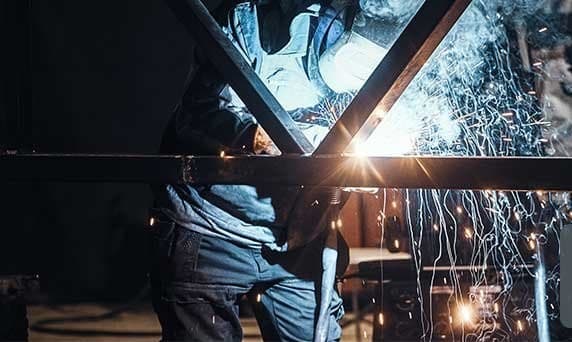
Pants are the part of welding kit people cheapest out on, and the part that catches the most spatter. Sparks fall. They land on your thighs, roll down your legs, and collect in anything that will hold them — a cuff, an open front pocket, a fold.
This guide covers what actually matters in a pair of welding pants, what the standards printed on the label really certify, and five flame-resistant pairs. We have not worn these; every figure below comes from the manufacturer's own specification, and each one is linked at the foot of the page. The same reasoning applies to our guide to the best welding shirts.
Do You Need Flame-Resistant Pants to Weld?
Usually yes, but the rule is narrower than most guides make out. OSHA has no regulation that says welders must wear FR clothing. What it has is 29 CFR 1910.252(b)(3), which says protective clothing “shall be suitable for the work to be performed”, and leaves the choice to the hazard.
In a 2012 letter of interpretation OSHA set out the position plainly: where welders are exposed to flash fires or short-duration flame, the agency expects employers to provide flame-resistant clothing — and where engineering or administrative controls remove that exposure, there is no requirement to provide it. The question is not “am I welding?” but “can flame reach me?” For most shop and field welding, it can.
The welding safety standard itself, ANSI/AWS Z49.1:2021, does not name a fabric. Clause 4.3 asks for clothing “made of suitable materials, to minimize skin burns caused by sparks, spatter, or radiation”, and its explanatory note E4.3 recommends heavier materials — leather or flame-resistant clothing — while warning that materials which melt should not be used.
What the Standards on the Label Actually Mean
Welding pants are sold with three or four acronyms on the tag, and most buying guides list them as if they were interchangeable. They are not. Only one of them is about fire.
The four you will see on a welding pants label
| Standard | What it certifies | The hazard it is for |
|---|---|---|
| NFPA 2112 | Flame-resistant clothing protecting industrial personnel against short-duration thermal exposures from fire | Flash fire — the one that matters for welding |
| NFPA 70E | Electrical safety in the workplace, including arc-flash PPE selection | Electric arc, not welding spatter |
| ASTM F1506 | Flame-resistant and arc-rated clothing for workers exposed to momentary electric arc | Electric arc again |
| ATPV and CAT | A number in cal/cm², and the category it falls into | How much arc energy the fabric survives — an arc-flash measure, not a spatter one |
So a pair of pants listing only NFPA 70E and ASTM F1506 is arc-rated workwear that happens to be flame-resistant. It is not wrong to weld in — arc-rated fabric is flame-resistant by definition — but the certification you actually want to see is NFPA 2112, because that is the one tested against fire rather than against an electrical arc.
One thing no acronym tells you: flame-resistant is not fireproof. FR fabric resists ignition and stops burning once the flame is removed. It still conducts heat, and a spark sitting against it long enough will still burn you.
What to Look For in Welding Pants
Certification is the first filter, not the whole answer. Four of the six points below are about the shape of the garment rather than the cloth — and they are the ones most guides skip.
- No cuffs
- Z49.1 is explicit — pants should not have cuffs and should not be turned up on the outside. A cuff is a pocket facing upwards at exactly the height spatter falls.
- Leg over the boot
- the leg should overlap the shoe top so spatter cannot drop inside. Boot-cut and relaxed legs exist for this reason, not for looks.
- Fewer open front pockets
- the same clause recommends eliminating pockets from the front of clothing, because sparks lodge in them. If yours has them, keep them empty and closed.
- Fabric weight
- heavier cloth puts more mass between a spark and your skin. Around 9 oz is usable; 12 to 15 oz is what you want for heavy work, at the cost of heat.
- Nothing meltable
- acetate, nylon, polyester and rayon as ordinary clothing melt onto skin. That warning is about untreated synthetics, not about a certified FR blend — an 88/12 cotton-nylon fabric carrying NFPA 2112 was tested and certified as a finished fabric.
- Clean of oil
- oil and grease on the cloth burn even though the cloth will not. Z49.1 asks for clothing to be kept clean for exactly this reason, and contamination is the most common way FR pants quietly stop protecting anyone.
Best Welding Pants for Men
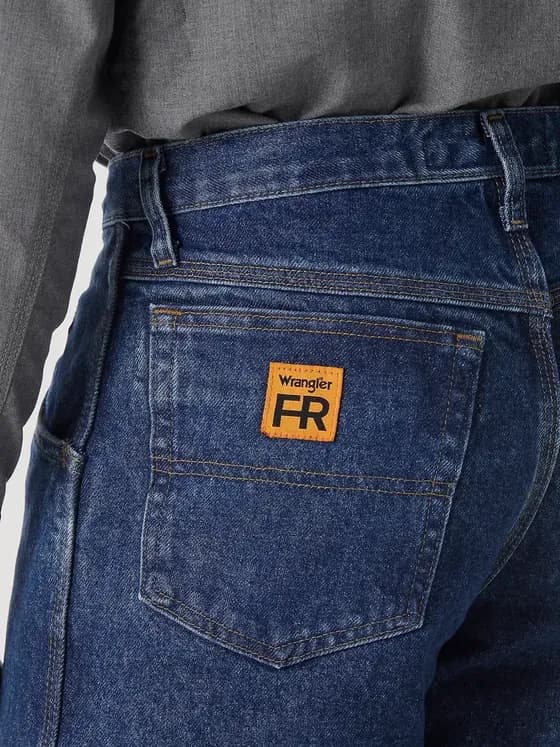
Wrangler Riggs Workwear FR Relaxed Fit Jean
The heaviest fabric of the five and the only all-cotton pair here, with the highest arc rating in the guide. If you want protection that looks like an ordinary jean, this is it.
Technical info
- Material: 100% cotton flame-resistant denim
- Fabric weight: 14.75 oz
- Arc rating: ATPV 22 cal/cm², CAT 2
- Certification: NFPA 2112 and NFPA 70E
- Fit: Relaxed, five pockets
- 14.75 oz — the most cloth between a spark and your leg of anything here
- ATPV 22 cal/cm² is the highest arc rating in this guide
- 100% cotton, so there is nothing in the fabric that can melt
- Relaxed leg is cut to sit over a work boot
- The weight that protects you is the weight you carry in a hot shop
- Stiff until it is broken in
- Five pockets, two of them on the front — keep those empty
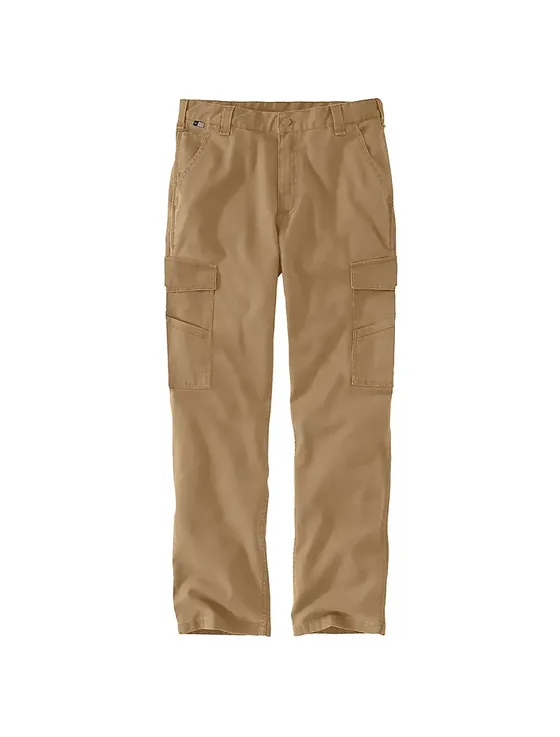
Carhartt FR Rugged Flex Relaxed Fit Canvas Cargo Pant
Canvas rather than denim, with a little stretch, and certified against both hazards. The easiest of the three to find in a full size range.
Technical info
- Material: 98% cotton / 2% spandex canvas
- Fabric weight: 9 oz
- Certification: UL Classified to NFPA 2112, meets NFPA 70E
- Arc category: CAT 2
- Colours: Dark khaki, navy
- UL Classified to NFPA 2112 — third-party certified, not self-declared
- 2% spandex means it moves when you kneel, without giving up the cotton
- Relaxed straight leg clears a boot
- Stocked across a wide waist and length range
- 9 oz — noticeably lighter cloth than the Wrangler
- Cargo pockets are exactly what Z49.1 warns sparks lodge in; keep the front ones shut
- Carhartt publishes no ATPV figure for it, so the arc rating is category-only
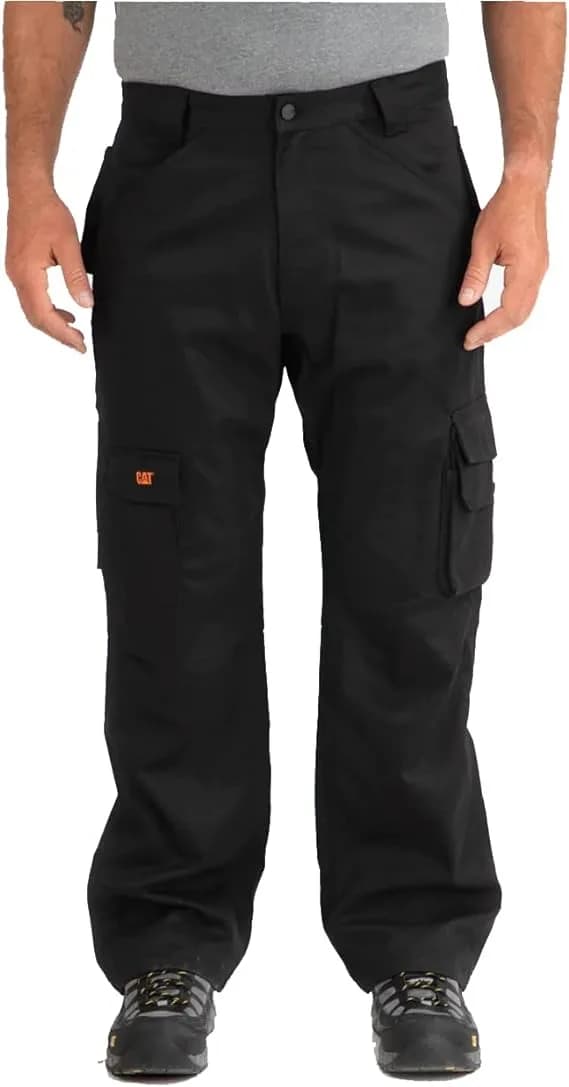
Caterpillar FR Cargo Work Pant
A 9 oz twill with knee darts for crouching, and the lowest arc rating here. The pick for a hot shop and kneeling work.
Technical info
- Material: 88% cotton / 12% nylon FR twill
- Fabric weight: 9 oz
- Arc rating: ATPV 11.5 cal/cm², CAT 2
- Certification: NFPA 2112 UL certified, NFPA 70E, ASTM F1506
- Detail: Knee darts for articulation
- Certified against both hazards, including ASTM F1506
- Knee darts make it the easiest of the three to kneel and weld in
- 9 oz twill is the least punishing in summer heat
- ATPV 11.5 cal/cm² is the lowest arc rating in this guide
- Cargo pockets, with the same caveat as above
- The size we checked showed only two left, so individual sizes can run thin
Best Welding Pants for Women
Both pairs are certified to the same standards as the men's. They are listed separately because the cut differs, not the protection.
Wrangler FR Retro Mae Bootcut Work Jean
The heavier and higher-rated of the two, in a modacrylic blend, cut boot-leg so it sits over a work boot.
Technical info
- Material: 69% cotton / 30% modacrylic / 1% spandex
- Fabric weight: 12.5 oz stretch denim
- Arc rating: ATPV 15 to 20 cal/cm² depending on the wash, CAT 2
- Certification: NFPA 2112 and NFPA 70E
- Fit: Bootcut
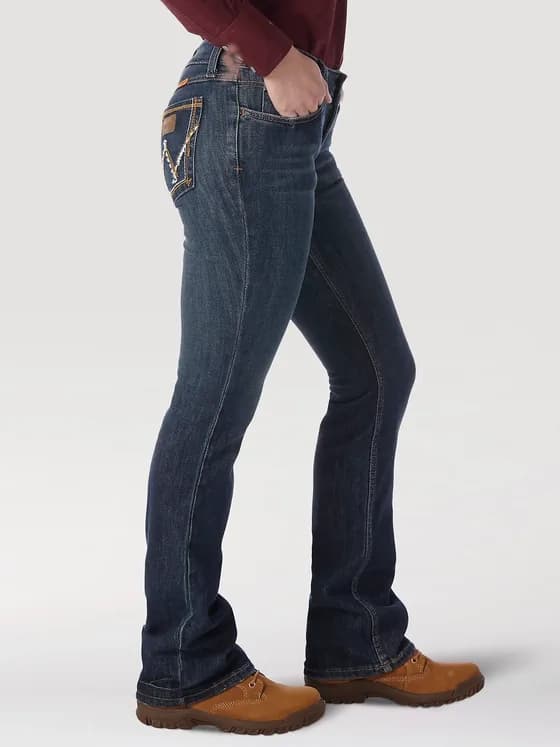
- 12.5 oz — the heavier of the two women's pairs
- Bootcut leg clears a work boot without being baggy
- 1% spandex gives enough movement to kneel in
- The arc rating depends on which wash you buy — the darker wash is rated lower
- Misses sizing only in this line
Ariat FR DuraStretch Entwined Boot Cut Jean
Almost all cotton with a little Lycra, UL classified to NFPA 2112, and the most consistently available pair in the guide.
Technical info
- Material: 98% cotton / 2% Lycra
- Fabric weight: 12 oz stretch denim
- Arc rating: ATPV 19 cal/cm², CAT 2
- Certification: UL classified to NFPA 2112, meets NFPA 70E and ASTM F1506
- Fit: Mid rise, boot cut
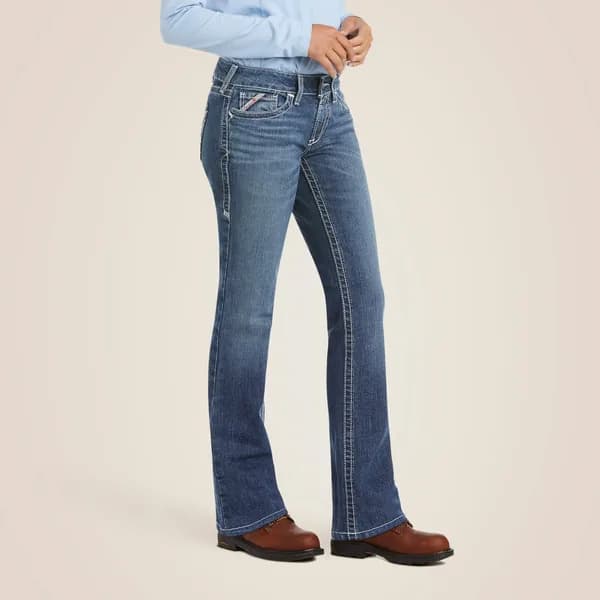
- ATPV 19 cal/cm² from a 12 oz denim — a good ratio of protection to weight
- 98% cotton, so almost nothing in it can melt
- Slightly lighter and lower-rated than the Wrangler in its better wash
- Stretch denim feels heavy to some wearers
The five compared
| Pair | Fabric | Weight | Arc rating | Best for |
|---|---|---|---|---|
| Wrangler Riggs FR Jean | 100% cotton | 14.75 oz | ATPV 22, CAT 2 | Most fabric, highest rating |
| Carhartt FR Rugged Flex Cargo | 98/2 cotton-spandex canvas | 9 oz | CAT 2 | Availability and movement |
| Caterpillar FR Cargo | 88/12 cotton-nylon twill | 9 oz | ATPV 11.5, CAT 2 | Hot shops, kneeling work |
| Wrangler FR Retro Mae | 69/30/1 cotton-modacrylic | 12.5 oz | ATPV 15–20, CAT 2 | Heaviest women's option |
| Ariat FR DuraStretch | 98/2 cotton-Lycra | 12 oz | ATPV 19, CAT 2 | Protection per ounce |
FR Jeans or Work Pants?
Three of the five pairs above are jeans, and in this line-up that is where the heavy cloth is. The Wrangler Riggs jean is 14.75 oz of 100% cotton FR denim rated ATPV 22 cal/cm2 - the most fabric and the highest arc rating in the guide. The two women's pairs are 12.5 oz and 12 oz denim at ATPV 15 to 20 and 19. Both of the canvas and twill cargo pairs are 9 oz, and one of them publishes no ATPV figure at all. If you came here searching for welding jeans rather than welding pants, the search is pointing you at the heavier end of the shelf.
What denim does not buy you is comfort. Fourteen ounces of cotton is fourteen ounces you carry all day, and the 9 oz Caterpillar twill exists for exactly that reason. The cargo pairs also move better - a knee dart, or two percent spandex, is easier to kneel in than stiff new denim - at the cost of front cargo pockets, which is the one feature ANSI Z49.1 actively warns about.
One line matters more than any of this. An FR jean and the jeans already in your wardrobe are not the same garment. Certified FR denim stops burning once the flame leaves it; ordinary denim is untreated cotton, and untreated cotton keeps burning. Heavy raw denim with no cuffs is a defensible compromise for occasional light work - we set out where that line sits in our comparison of welder pants and regular pants - but it is a compromise rather than a substitute, and no amount of weight turns it into NFPA 2112.
Abrasion Resistance: the Question the Spec Sheets Do Not Answer
People search for abrasion-resistant work pants for welding and metal fabrication, and they are asking a fair question: welding wears through knees. But not one of the five pairs above publishes an abrasion figure, and no FR workwear maker we could find publishes one either. That is not evasion. There are two standard ways to measure it - ASTM D3884, the rotary platform abrader, and ASTM D4966, the Martindale - and both standards warn, in their own text, against reading the result as durability.
ASTM D3884 is not even a test method. ASTM publishes it as a Guide, and says end-use trials should accompany laboratory testing, because the rotary abrader does not always reveal differences that show up in actual use. D4966 is blunter about itself: its between-laboratory precision is “poor”, and the method is “not considered satisfactory for acceptance testing of commercial shipments of fabric”. A number two laboratories cannot reproduce is not a number to buy a pair of pants on.
So judge the construction instead. Four things decide how long a pair lasts, and all four are on the label or visible in the photograph.
Where welding pants wear out, and what to look at
| Where they go first | What decides it | On this page |
|---|---|---|
| Knees | Fabric weight, and whether there is a second layer or an articulated dart | The Wrangler Riggs is 14.75 oz, the heaviest cloth here; the Caterpillar uses knee darts for movement rather than a patch for wear |
| Seat and thighs | Weight again, and whether the denim is rigid or stretch | The two stretch pairs carry 2% spandex and 2% Lycra - easier to kneel in, and one more thing to break down with washing |
| Hems | Whether the leg clears the boot or folds under the heel | A boot-cut leg that sits over the boot top lasts longer than a straight leg that drags, and it is what Z49.1 wants anyway |
| Pocket edges | Where you clip a tape, a soapstone or a rod stub | Front pockets are the ones Z49.1 asks you to do without, so the durable answer and the safe answer agree |
That is not a rule about the fibre, though, and it is worth being precise. The Caterpillar pair above is 88% cotton and 12% nylon, and it is UL certified to NFPA 2112. The difference is that its nylon is spun into a flame-resistant fabric and the finished garment has been put on a manikin and set alight for three seconds; a Cordura patch stitched onto an ordinary work pant has been through none of that. Read the certification, not the fibre list.
Keeping Them Protective
FR pants stop protecting long before they look worn out. Fabric softener, chlorine bleach and starch all leave something flammable behind, and oil or grease soaked into the cloth burns whether or not the cloth does. Our guide to cleaning welding clothes covers the washing rules, and how flame-resistant clothing works explains what the treatment is doing.
If you are weighing FR pants against the heavy jeans already in your wardrobe, we compared welder pants and regular pants directly.
Frequently Asked Questions
Do you need flame-resistant pants for welding?
In practice, yes. OSHA has no rule naming FR clothing for welders, but its 2012 letter of interpretation says that where welders are exposed to flash fire or short-duration flame, employers are expected to provide flame-resistant clothing. Most welding involves that exposure. Where controls genuinely remove it, FR clothing is not required.
Can you weld in ordinary jeans?
Heavy 100% cotton jeans are far better than anything synthetic, and many people use them for light, occasional work. They are not flame-resistant: cotton ignites and keeps burning. If you weld regularly, buy FR. Whatever you wear, it must have no cuffs and the leg must cover the boot top.
Are FR jeans as protective as welding pants?
It depends on the cloth, not the cut. A certified FR jean and a certified FR cargo pant carrying the same NFPA 2112 mark are both flame-resistant; what separates them is weight and arc rating. In this guide the denim pairs run 12 to 14.75 oz and the canvas and twill pairs 9 oz, so the jeans put more cloth between a spark and your leg. An uncertified jean, however heavy, is not flame-resistant clothing at all.
Are abrasion-resistant work pants good for welding?
Only if they are also certified flame-resistant. The reinforcement that makes an ordinary work pant abrasion-resistant is usually nylon, which melts rather than burns, and AWS Z49.1's explanatory clause E4.3 says synthetic materials that can melt and cause severe burns should not be worn for welding or cutting. Nylon inside a certified FR blend is a different matter: the Caterpillar pair on this page is 12% nylon and UL certified to NFPA 2112, because the finished garment passed the manikin test. And no maker publishes an abrasion figure anyway - the two ASTM methods for measuring it, D3884 and D4966, both warn that the result does not predict real-world wear.
What does NFPA 2112 mean on a pair of welding pants?
NFPA 2112 is the standard on flame-resistant clothing protecting industrial personnel against short-duration thermal exposures from fire — flash fire. A garment certified to it has been tested as a finished fabric, not merely treated. It is the certification most relevant to welding. NFPA 70E and ASTM F1506 are about electric arc.
Should welding pants go over or inside your boots?
Over. ANSI Z49.1 says the leg should overlap the shoe top so spatter cannot get into the shoe, and that pants should not have cuffs or be turned up on the outside. Tucking pants into boots funnels sparks straight in.
Can you wash flame-resistant welding pants at home?
Yes — warm water and ordinary liquid detergent. Never fabric softener, chlorine bleach or starch, all of which leave a flammable residue on the fabric. Wash them separately from oily work clothes, because oil carried over is what usually ruins FR protection.
Sources
Every figure above was taken from the manufacturer's own specification or from the body that publishes the standard, not from another buying guide.
- ANSI/AWS Z49.1:2021, Safety in Welding, Cutting, and Allied Processes — clause 4.3 and explanatory note E4.3, on clothing materials, cuffs, pockets and keeping clothing clean
- OSHA letter of interpretation, 12 January 2012 — the agency's position on flame-resistant clothing for welders
- NFPA 2112 — Standard on Flame-Resistant Clothing for Protection of Industrial Personnel Against Short-Duration Thermal Exposures from Fire
- ASTM F1506-20a — Flame Resistant and Electric Arc Rated Protective Clothing Worn by Workers Exposed to Flames and Electric Arcs
- Wrangler FR Relaxed Fit Jean — fabric, weight and arc rating
- Carhartt FR Rugged Flex Canvas Cargo Pant — fabric, weight and certification
- Caterpillar FR Cargo Work Pant — fabric, weight, arc rating and knee construction
- Wrangler FR Retro Mae Bootcut Work Jean — arc ratings by wash
- Ariat FR DuraStretch Entwined Boot Cut Jean — fabric, weight and arc rating
- ASTM D3884 — Standard Guide for Abrasion Resistance of Textile Fabrics (Rotary Platform Abrader Method)
- ASTM D4966-22 — Standard Test Method for Abrasion Resistance of Textile Fabrics (Martindale Abrasion Tester Method)
The Short Answer
Buy NFPA 2112 pants in cotton or a certified FR blend, with no cuffs and a leg that sits over the boot, and keep them clean of oil. The Wrangler Riggs jean gives you the most fabric and the highest arc rating, the Carhartt cargo is the easiest to find in your size, and the Caterpillar is the one to wear when the shop is hot. For women, the Wrangler Retro Mae is the heavier pair and the Ariat gives the best protection for its weight.